


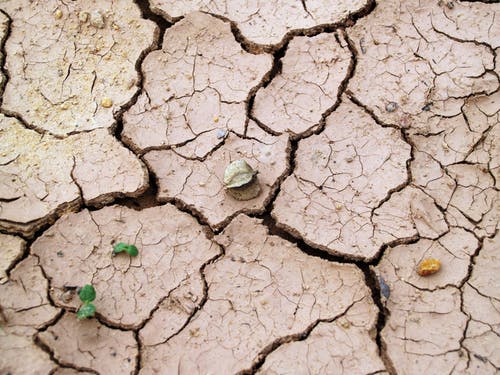
The drought in Gauteng has once again drawn attention to the ongoing issue of water scarcity in South Africa. Stan Muyebe OP examines the impact of mining in areas that are recognised as important sources of water. He calls for private and public ecological conversion by putting pressure on government to implement policies that better protect this precious resource, such as a ban on mining activities in water catchment areas.
The response to the water crisis in South Africa requires both behavioural and policy change. In late October, Water and Sanitation Minister Lindiwe Sisulu emphasized the need for citizens to change their water consumption habits. It is true that citizens need to use water sparingly. This is a moral call to ecological conversion. This call should, however, not blind us to the need on the part of the government to play its part in responding to the water crisis.
Water source areas sustain human life and the economy
One of the wonders of God’s creation in South Africa that we perhaps do not fully appreciate is the existence of 22 water source areas in various provinces. Much of the country’s surface water, including streams, rivers and wetlands, originate from these 22 catchment areas. The water security system, as well as the nation’s economy, rely heavily on these catchment areas. The water they produce supports 50 percent of the population, 64 percent of the national economic activity. Furthermore, Gauteng — the country’s largest economic hub and home to 21 percent of its population — derives 65 percent of its surface water from these water sources.
The 22 source areas are God’s gift to the nation, requiring a response of gratitude and stewardship. It is a gift that is unique and irreplaceable. There is no replacement for water and water source areas. In his message for the world day of prayer for the care of creation 2018, Pope Francis called for greater protection of water sources.
Lack of political will to protect water sources
Unfortunately, many human activities are disrupting, depleting and contaminating the water in these catchment areas. The worst of these is mining, especially coal mining.
Given their value, one would expect government to enact radical measures to protect water sources. The current legal framework is, however, limited in its ability to protect these areas because there is no specific legislation dedicated to water sources. As a result, mining continues unabated in these sensitive areas, often with impunity and the government’s blessing, inflicting immense harm on the water security of present and future generations.
This lack of political will to put pressure on the government to close the legislative gaps that allow mining to continue in water catchment areas. The best solution would be to impose a 10-year moratorium on mining in 22 strategic water source areas in the country.
In 2018, the Water and Sanitation Department, for example, mooted the idea of including a mining ban in its master plan for water management. Lack of political will and inter-departmental politics prevented the formulation of a clear policy recommendation.
The need to grow the economy and stimulate job creation are often used as excuses for government to ignore the need to protect the country’s precious water sources. There is a fear that banning mining activities in these areas would jeopardize the country’s ability to remain competitive, draw much needed foreign direct investment and prevent the mining industry from reaching their growth targets.
The government’s position on mining is often represented as a utilitarian model of economic development that responds to the immediate needs of the current generation, without regard to the water security needs of future generations of South Africans. Such a model fails to stand an ethical test of integral development, which is a vision of development that addresses the needs of the whole person and all persons, including those of the future generation.
A good starting point would be to gather evidence about the impact of mining in water catchment areas and establish what percentage of all mining activity occurs in these areas. The next step would be the enactment of environmental policies that protects these critical areas. This would be make it possible to implement a mining ban in water sensitive areas, while still allowing mining activities to take place in non-protected areas.
Justice and Peace teams up with civil society activists
The Centre for Environmental Rights (CER) and other civil society partners have been at the forefront of advocating for greater protection of water source areas. In March 2018, the Southern African Bishops Conference’s Justice and Peace Commission joined CER in calling for the banning of mining in water catchment areas. In its statement, it warned the government “to reconsider its pursuit of short-term economic gains and narrow outlook on energy that prevent our nation from protecting water as a scarce resource and as God’s precious gift.”
In November 2018, CER won a landmark court case at the North Gauteng High Court. It challenged the granting of a mining licence in Mabola near Wakkerstroom in Mpumalanga. Mabola is part of the Enkangala Drakensberg strategic water source area, which supplies water to parts of Mpumalanga, KwaZulu-Natal, Gauteng and the Northern Cape. CER won the case purely on procedural grounds.
The victory did not influence radical policy change on the part of the government, but was a step in the right direction. There is still a huge amount of work to be done to exert pressure on the government to introduce stronger protection for water source areas.
Christians should be at the forefront of efforts to protect water sources
It is true that the root causes of the current water crisis in South Africa are complex and multi-faceted. The water crisis therefore necessitates multiple interventions targeting both the demand and supply side of the water security system. Water governance systems should be strengthened and investment structure for water infrastructure be reviewed. However, all things considered, the protection of 22 water source areas should be prioritized.
Given that “water is God’s treasure to humanity,” (Pope Francis, 23 March 2017), Christians should be at the forefront of challenging the government’s ecological conversion, such as considering a 10-year moratorium on mining in water source areas.


