• Terms and Conditions
  • Privacy Policy
  • How to contact us
Wednesday, June 10, 2026
No Result
View All Result
SACBC Justice And Peace
OUR NEWSLETTER
  • Home
  • About Us
    • Staff
    • Mission
    • How to contact us
  • Movements under pastoral accompaniment
    • Church witness in context of government corruption and state capture
    • Church walking with unemployed graduates challenging government policies on youth unemployment crisis
    • Church walking with rape survivors, and a movement tackling violent crime, alcohol abuse and moral renewal
    • Mission in context of scramble for Africa’s minerals and land
    • Church walking with apartheid-era human rights victims seeking reparation and the healing of the nation
  • Theology at the margins
  • Newsletter
  • News \ Articles
  • Home
  • About Us
    • Staff
    • Mission
    • How to contact us
  • Movements under pastoral accompaniment
    • Church witness in context of government corruption and state capture
    • Church walking with unemployed graduates challenging government policies on youth unemployment crisis
    • Church walking with rape survivors, and a movement tackling violent crime, alcohol abuse and moral renewal
    • Mission in context of scramble for Africa’s minerals and land
    • Church walking with apartheid-era human rights victims seeking reparation and the healing of the nation
  • Theology at the margins
  • Newsletter
  • News \ Articles
No Result
View All Result
SACBC Justice And Peace
No Result
View All Result
Home Problem of violence, crime and alcohol abuse: Church walking with rape victims and tavern owners

Young Women for Life Challenge Harmful Traditions in Fight Against Gender-Based Violence in Mpumalanga

October 8, 2025
in Problem of violence, crime and alcohol abuse: Church walking with rape victims and tavern owners
Young Women for Life Challenge Harmful Traditions in Fight Against Gender-Based Violence in Mpumalanga
Share on FacebookShare on Twitter

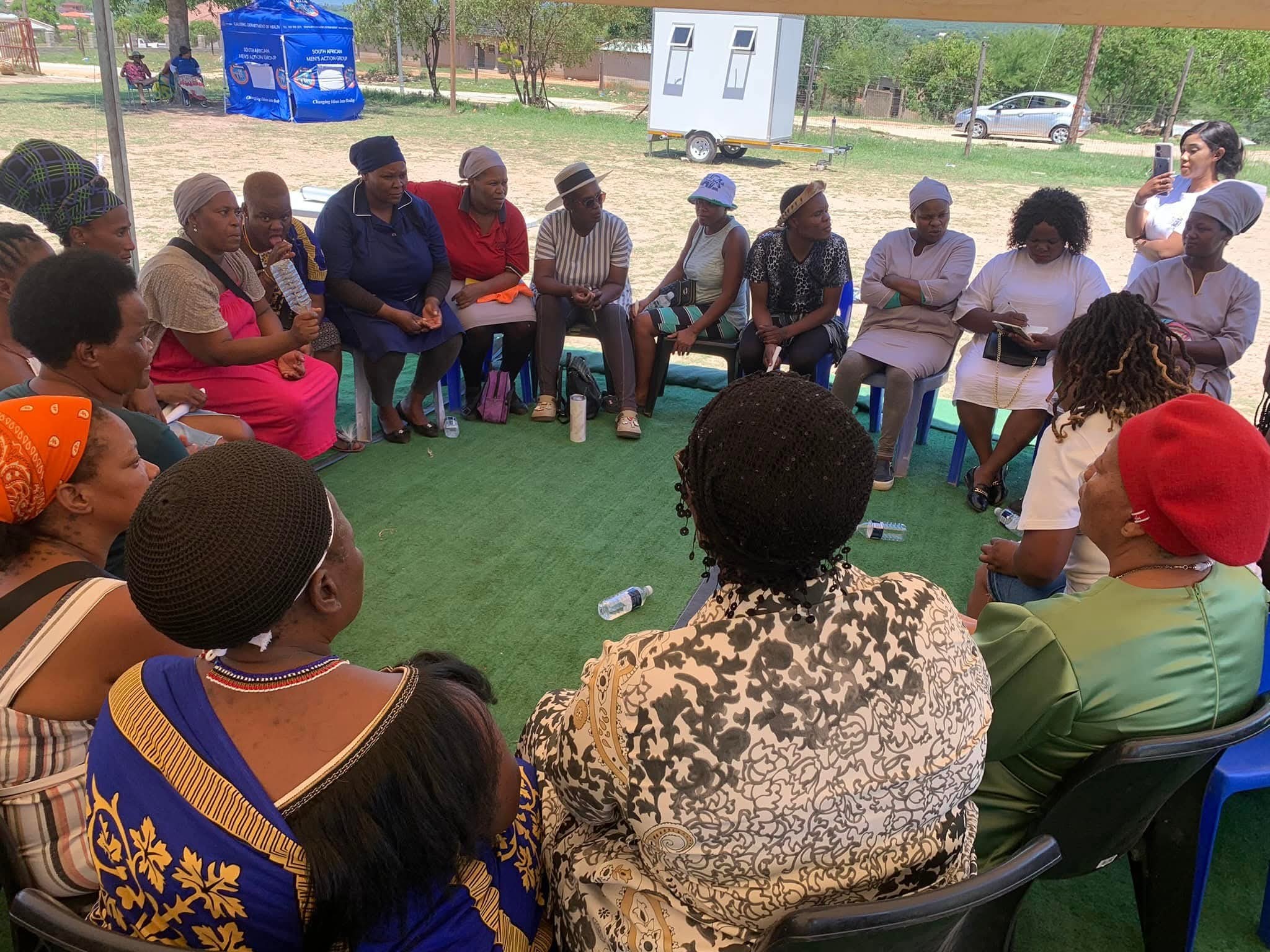
In rural Mpumalanga, a group of determined young women is taking the fight against gender-based violence beyond police stations and courtrooms — into the heart of their own communities, where harmful traditional norms often go unchallenged.

Young Women for Life, a grassroots movement representing rape survivors and young women affected by gender-based violence, has been holding a series of dialogues with traditional leaders to confront the cultural practices and beliefs that contribute to violence against women and girls.

The meetings, held in several villages across the province, are part of the movement’s broader mission: to change not just laws and policies, but also the social norms that allow violence to persist. For many young women, these conversations are long overdue.

“Too often, harmful traditions are used to justify the abuse of women,” said one Young Women for Life member. “We have to talk about the way certain cultural expectations limit women’s freedom, silence survivors, and make violence seem normal. If we don’t talk about it, nothing will change.”
The dialogues have not shied away from difficult topics. The young women raised concerns about deeply entrenched gender roles, the policing of women’s behaviour, and the belief that women should remain silent about abuse to protect the family’s or community’s honour. They also spoke about the pressure on survivors not to report rape, and the stigma they face when they do.

Crucially, the discussions acknowledged the complexity of culture and tradition — and the difference between practices that build strong communities and those that perpetuate inequality. “Culture should never be a weapon against women,” one participant said. “It should be something that protects and uplifts us.”

Some traditional leaders responded positively, expressing willingness to examine long-held norms and work with young women to create safer communities. “We cannot ignore the reality that our daughters, sisters, and mothers are suffering,” said one chief. “As custodians of tradition, we also have a responsibility to adapt and grow.”

The dialogues represent an important shift in how gender-based violence is addressed in rural South Africa. While police reforms, legal processes, and awareness campaigns remain crucial, many activists argue that lasting change requires confronting harmful social norms at their roots — and that means involving traditional leaders, who wield significant influence in rural life.

For the young women involved, the conversations are also about reclaiming agency. “We are often told that tradition is fixed, that we have no say,” said another member. “But traditions are made by people — and they can be changed by people. We want to be part of shaping a culture that values women and keeps us safe.”

As the meetings continue, Young Women for Life hopes they will lead to more sustained collaboration with traditional authorities — including community-led education campaigns, public declarations against gender-based violence, and the development of new cultural practices that promote equality.

The message from these young women is clear: the struggle against gender-based violence cannot succeed without confronting the norms that sustain it. And that work must happen not just in cities and courts, but in villages and traditional councils — in the spaces where culture is lived and defined.

“We respect our traditions,” one activist concluded, “but we also believe tradition must evolve. If a practice hurts women, it is not worth protecting.”


Next Post

Church organizes a meeting between movement of rape survivors and various EU ambassadors in Pretoria

Connect with us

Recommended

Lessons to learn from the Truth and Reconciliation Commission in South Africa:  Its successes and failures

Lessons to learn from the Truth and Reconciliation Commission in South Africa: Its successes and failures

9 months ago
HeForShe Taverns debunking the social norm:  When a man forces self on wife, should it be considered as rape?

HeForShe Taverns debunking the social norm: When a man forces self on wife, should it be considered as rape?

12 months ago

SACBC Justice and Peace Commission is an agency of the Southern African Catholic Bishops’ Conference.
Its mission and role: “To proclaim the good news to the poor, to proclaim freedom for the prisoners and recovery of sight for the blind, to set the oppressed free.” (Luke 4:18).

  • Terms and Conditions
  • Privacy Policy
  • How to contact us

© 2025 SACBC Justice And Peace All Rights Reserved. Designed by Vasiliki Technologies.

No Result
View All Result
  • Home
  • About Us
    • Staff
    • Mission
  • Take Action
    • Church witness in context of government corruption and state capture
    • Church walking with apartheid-era human rights victims seeking reparation and the healing of the nation
    • Church walking with rape survivors, and a movement tackling violent crime, alcohol abuse and moral renewal
    • Mission in context of scramble for Africa’s minerals and land
    • Church walking with unemployed graduates challenging government policies on youth unemployment crisis
  • News \ Articles
  • Newsletter
  • How to contact us

© 2025 SACBC Justice And Peace All Rights Reserved. Designed by Vasiliki Technologies.

Login to your account below

Forgotten Password?

Fill the forms bellow to register

All fields are required. Log In

Retrieve your password

Please enter your username or email address to reset your password.

Log In