audiences effectively.
“There are forums such as AA or SANCA, but no one uses them,” one respondent from Port Elizabeth said.
Besides, legislation to prevent risky drinking behaviour is often not implemented, thus not effective: 80% of Klerksdorp survey respondents said they knew about by-laws, but 64% said these do not help reduce alcohol-related harms, for instance, among minors.
“Some tavern owners like to do things as they wish, like having under-aged children in taverns,” one respondent said. “Underage drinking does not matter at all. You find that during the day a young boy in a full school uniform can get to a tavern and get a beer.”
In Port Elizabeth, patrons and tavern owners also noted a lack of implementation of and non-compliance with by-laws related to opening hours, which translates into most taverns, with a few exceptions, opening early and closing extremely late, if they ever close.
Inadequate and corrupt law enforcement officials are not aiding the situation. “In some cases, the police are the friends of the tavern owners, so they [the owners] are protected,” a Klerksdorp respondent said, whilst another confided the police are taking bribes from tavern owners.
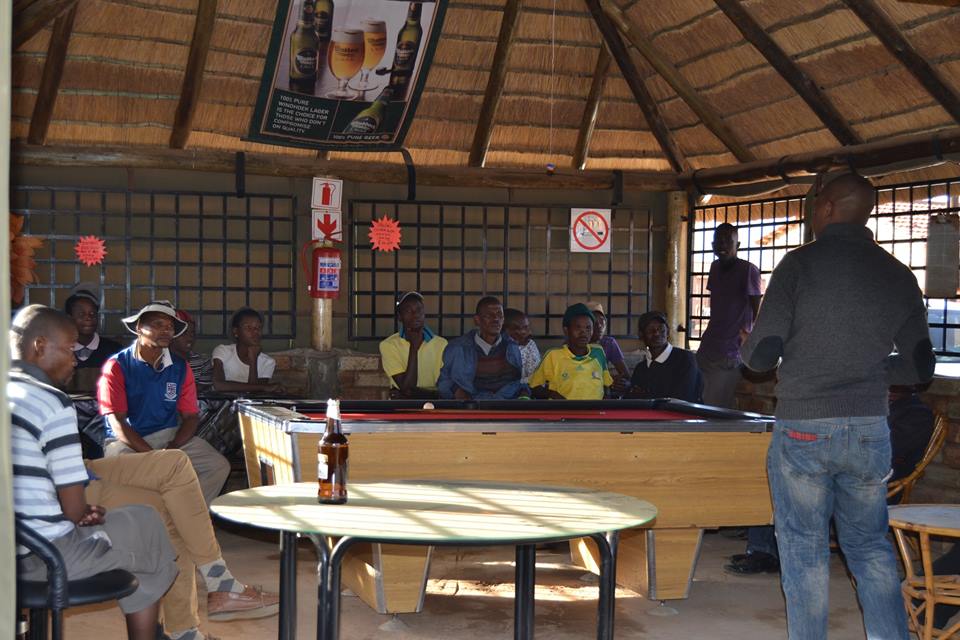
That said, whilst most respondents enjoy drinking, many want to be part of reducing alcohol-related harms. A quarter of Klerksdorp participants (24%), for instance, said to have attended Community Policing Forum (CPF) meetings organized by alcohol producers, the Liquor board, police, and other stakeholders to talk about problems caused by taverns concerning closing hours, underage drinking, and the need for more security. Many others want to. “I have not participated before but going forward I want to be part so I can challenge the municipality about their by-laws,” a respondent said.
This is where the key lies in fighting South Africa’s alcohol-related harm problem, Batisai says. Besides eliminating all corrupt law enforcement agents and hiring more officers to ensure adequate patrols and strict enforcement of municipal by-laws take place, communities should receive adequate tools that work within their context. “Communities should urgently strengthen existing CPFs and revive those that collapsed in the past to ensure participation and involvement.”
Kezia Batisai’s baseline study on the reduction of alcohol-related harms project in taverns and universities can be downloaded here [https://invisiblestories.org.za/wp-content/uploads/2020/08/JPC-DGMT-Baseline-Study-on-Reduction-of-Alcohol-Related-Harms-Project-in-Taverns-and-Universities.pdf]
Written by Miriam Mannak, business writer
Source: New SACBC report: Social costs associated with alcohol abuse higher than previously thought